
The Psychology of Trading: Skill Is Only Half the Job
Educational content, not investment advice. See our Disclaimer.
Why trading psychology gets underrated
Most beginner education on trading focuses heavily on technical setups, order entry mechanics, and platform tools — the visible, teachable skill. The emotional side (fear of loss, overconfidence after a winning streak, the urge to revenge-trade after a loss) gets far less airtime despite being, by the account of most experienced traders, roughly as decisive to long-run outcomes. A trader can understand every setup in this course perfectly and still fail consistently if entries and exits are driven by emotion rather than plan.
Two emotional traps that erase otherwise sound strategies
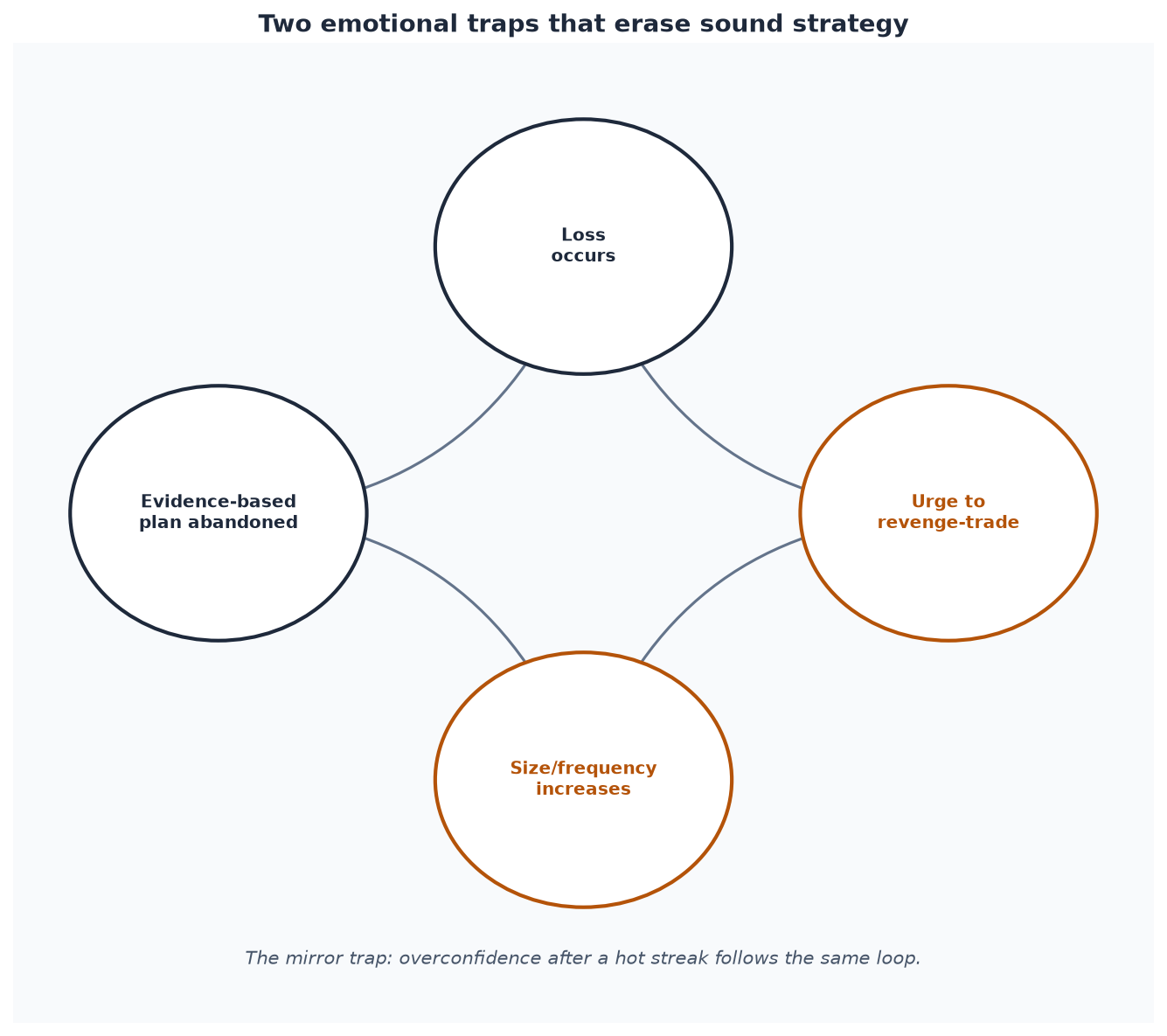
Revenge trading is the pattern of increasing size or frequency specifically to recover a loss quickly, rather than because the market presented a genuinely good setup. It replaces an evidence-based decision with an emotionally-driven one, and it tends to compound a single loss into several, because the trades taken under this pressure weren’t the ones that would have been taken on a calm day. Overconfidence after a hot streak is the mirror image: a run of wins creates a (usually false) sense that risk has decreased, leading to larger size and looser rules precisely when discipline should be holding steady. Both traps share a root cause — letting the emotional state of the moment override a decision rule that was set when the trader was calm.
Two metrics beyond win rate that matter for mindset
Experienced traders often track consistency (how many weeks out of the last several were net profitable, treated as a rolling measure) alongside win rate and reward-to-risk, because consistency is a better predictor of psychological sustainability than any single great month. A trader who is profitable in most weeks, even modestly, tends to build the calm confidence that supports good decision-making; one who swings between huge months and account-threatening drawdowns tends to trade from fear or euphoria rather than process.
A practical starting discipline: break the ice with small size
Discomfort with risking real money is normal, not a sign something is wrong. A workable way to build tolerance is trading deliberately small — small enough that a loss genuinely doesn’t trigger a strong emotional reaction — and only increasing size once a given size level stops producing a stress response that affects decision-making. Jumping to a size that feels exciting or frightening defeats the purpose; the goal of this stage is calm, not adrenaline.
Acceptance over denial
A loss, a red day, or a losing streak are normal features of active trading, not evidence of failure, provided the process (entries, exits, and risk control) was followed. The healthier response to a loss that happened within a sound process is acknowledging it plainly and moving to the next decision, rather than either denying it happened or spiraling into self-criticism that degrades the next trade’s decision-making. Treating the plan as something to evaluate honestly after the fact — not something to defend emotionally in the moment — is a learnable skill, and it tends to improve with deliberate practice (see the lesson on reviewing trades) more than with willpower alone.